Starting plates are not house plates
Wikipedia’s automotive-battery article separates cranking tests from amp-hour capacity. A starting battery can run lights for a while. Doing that every night is a cycling job it was not built for. Dawn no-crank after a stereo at the sandbar is this article, not a defective starter motor.
One tray is the honest exception
A small skiff or a simple jet boat with a dual-purpose AGM and modest electronics can share. A livewell, a big stereo, and a fridge cannot. If the loads grew, add a battery and a switch. Wikipedia’s isolator article is how you keep the house side from flattening the starter.
BOTH overnight
A switch left on BOTH ties the banks. House loads then eat the cranking battery too. We ask where the switch was, not only what the meter says.
Memory draws count
A week on a lift with a stereo amp that never sleeps is a parasitic on whatever bank it sits on. If that is the starter, Saturday is a jump. Find the draw, then decide if the pack is already sulfated.
Pinellas pattern
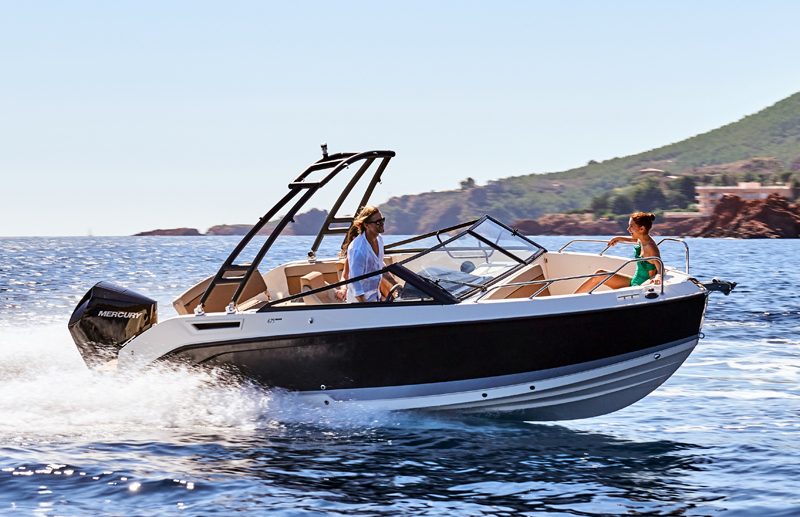
Whalers and Yamaha jet boats with one well are the usual share-the-starter boats. We come to the lift. If the boat still has one tray, we talk dual-purpose. If it grew loads, we talk a second battery.
What dual-purpose will and will not cover
A dual-purpose AGM can run a radio, nav lights, and a small pump and still crank a modest outboard the next morning if it went back on a charger. It will not run a livewell all afternoon and a stereo at idle and then start a big four-stroke at dusk. When the loads crossed that line, the honest next step is a second battery and a switch, not a larger dual-purpose sticker in the same well. We will say which side of that line you are on after we see the switch and the pumps.
Sources
- Wikipedia — Automotive battery (CCA, CA/MCA, amp-hours, BCI group size)
- Wikipedia — Battery isolator
If this is the job on your boat, see how we replace batteries at the boat. We come to you — Florida towns and counties.